A restaurant ordering 500 staff shirts has different priorities than a startup producing 25 detailed event tees. That is why screen printing vs DTF is not a simple quality contest. Both methods can create professional branded apparel, but the right choice depends on your artwork, garment type, order volume, budget, and deadline.
For businesses, the goal is not just a good-looking print on day one. It is choosing a decoration method that supports consistent branding, feels right for the garment, and makes financial sense for the quantity you need. Here is how to make that decision with confidence.
Screen Printing vs DTF: The Core Difference
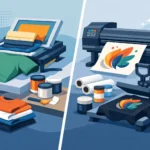
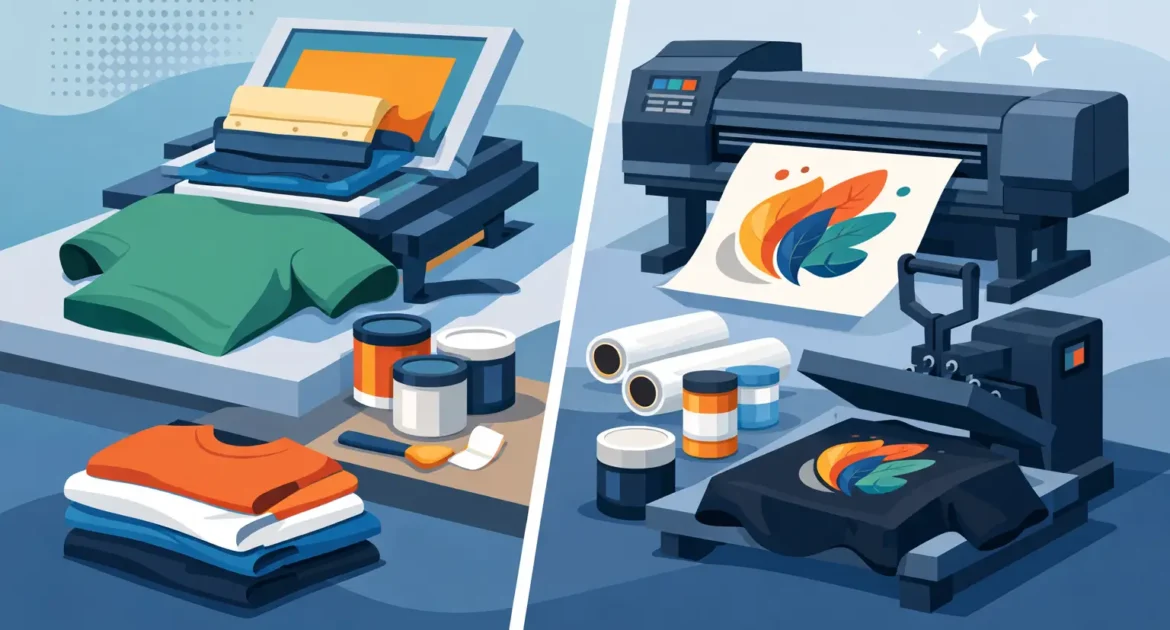
Screen printing applies ink directly to the garment through a prepared mesh screen. Each color in the design typically requires its own screen, and the ink is cured with heat to create a durable print. It has long been a preferred method for uniforms, promotional apparel, retail merchandise, and large runs of shirts with bold graphics.
DTF, or direct-to-film printing, begins with a design printed onto a special transfer film. Adhesive powder is applied and cured, then the finished transfer is heat-pressed onto the garment. The process can reproduce detailed, full-color artwork without creating a separate screen for every color.
The practical difference is setup. Screen printing takes more preparation upfront, while DTF is built for flexibility. That distinction affects pricing, speed, color capability, and the best order size for each method.
When Screen Printing Is the Better Choice
Screen printing performs especially well when your artwork uses a limited number of solid colors and you need a larger quantity of matching garments. Once the screens are prepared, production becomes efficient. This usually makes the per-shirt cost more attractive as quantities increase.
It is a strong option for company uniforms, team shirts, event merchandise, workwear, and promotional campaigns where the same design will be repeated across dozens or hundreds of pieces. A clean one-color logo on polo shirts or a two-color graphic on cotton tees often looks sharp and intentional with screen printing.
The ink feel also matters. Standard plastisol screen printing can have a noticeable printed layer, particularly with large designs. However, experienced production can manage ink coverage well, and water-based or specialty ink options may offer a softer feel on suitable garments. For bold artwork, screen printing delivers saturated color and excellent visual impact.
Durability is another major advantage. Properly cured screen-printed designs are made to handle repeated washing and regular wear. This makes the method a reliable choice for apparel that will be used frequently, such as staff uniforms, construction shirts, restaurant workwear, or branded retail items.
The trade-off is that complex, multi-color artwork requires more screens, setup time, and registration work. If you need a small run of shirts with a photographic image, color gradients, or many logo colors, screen printing may not be the most cost-effective route.
Screen Printing Is Best for
Choose screen printing when you have a medium to large order, a design with a few defined colors, and a need for consistent, long-lasting results. It is also ideal when you expect to reorder the same design, since the production approach is designed for repeatable volume.
When DTF Is the Better Choice
DTF is often the more practical option for small orders, detailed artwork, and fast-changing designs. Because the image is printed digitally, it can handle full-color logos, fine text, gradients, illustrated artwork, and photo-style graphics without adding a separate setup charge for each color.
For a startup preparing a limited product drop, a school organizing a small event, or a brand testing several designs before committing to a larger run, DTF offers useful flexibility. You can print a few shirts with a complex design without paying for multiple screen setups.
DTF also works well across a wide range of fabric colors. A white underbase is included where needed, helping bright artwork stand out on dark garments. The transfer can be applied to cotton, polyester, cotton-poly blends, and many other common apparel fabrics, making it useful when an order includes different garment types.
Turnaround can be another advantage. With no screens to prepare, DTF can move quickly from approved artwork to production. That does not mean every DTF job is automatically same-day, since artwork approval, garment availability, and order size still matter. But for short runs and detailed designs, it can reduce production complexity.
The finished transfer has a smooth, flexible film-like feel. Quality DTF transfers can be durable when applied correctly, but the texture is different from ink printed directly into the fabric. For large chest prints, some customers may prefer the softer feel of a well-executed screen print. For detailed logos, small graphics, and colorful artwork, the clean edge definition of DTF is often the bigger priority.
DTF Is Best for
Choose DTF when you need low quantities, full-color art, detailed graphics, multiple design variations, or a quick solution for custom apparel. It is particularly effective for names, numbers, small logo runs, event shirts, and designs where color count would make screen printing expensive.
Cost: Look Beyond the Price Per Shirt
The most common mistake is comparing only one quoted unit price. The real cost of branded apparel includes setup, artwork complexity, garment selection, print size, and quantity.
Screen printing usually has higher upfront costs because screens must be created and the job must be set up for each ink color. On a 20-piece order, those costs can have a meaningful effect on the price per shirt. On a 200-piece order, the same setup cost is spread across many more garments, making screen printing highly competitive.
DTF generally avoids screen setup fees, so the price stays more predictable for small runs and multi-color art. However, a large, full-color DTF print uses more transfer material and pressing time than a simple logo. At higher quantities, DTF is not always the lower-cost method.
A dependable print partner should review the full specification before recommending a process. The most accurate quote considers the garment, the number of print locations, artwork colors, size range, and delivery deadline rather than relying on a generic per-piece estimate.
Color, Detail, and Brand Presentation
If your brand artwork includes photographic elements, subtle gradients, fine outlines, or a logo with many colors, DTF can reproduce those details more easily. It lets businesses maintain complex artwork without simplifying it into a small set of spot colors.
Screen printing produces strong, solid color with a classic branded look. It is ideal for logos that need to be bold from a distance, such as a white company mark on black shirts or a two-color event design. Specialty inks can also add effects such as metallic finishes, puff texture, or high-density details when the design and garment suit them.
Neither method fixes poor artwork. Low-resolution files, blurry logos, and unapproved color variations can weaken the final result regardless of the print technique. Supplying clean vector artwork when possible, or having the design reviewed before production, protects brand consistency across every shirt.
How to Choose the Right Method for Your Order
Start with the quantity. For large runs with a simple repeated design, screen printing is usually the strongest value. For smaller quantities or several design versions, DTF is often more efficient.
Then assess the artwork. A simple logo with one to three colors is a natural fit for screen printing. A colorful illustration, photo, or design with gradients is usually better suited to DTF. Finally, consider the garment experience. If soft hand feel on a large design is a priority, discuss screen printing ink options. If clarity and color detail matter most, DTF may be the right direction.
There are exceptions. A small, one-color order can still benefit from screen printing if the look is essential, while a large DTF order may be the right call when the art is too detailed to separate economically. The best production choice comes from matching the method to the job, not forcing every design into one process.
At Doha Print, the focus is on helping customers choose the option that delivers polished results without unnecessary cost or delay. Share your artwork, garment preferences, quantity, and required delivery date early. That gives your print team room to recommend the method that makes your apparel look intentional, wear well, and represent your brand properly.
Your shirts will be seen in meetings, stores, events, and social posts long after the order is delivered. Treat the print method as part of the brand decision, and the right choice will show in every wear.