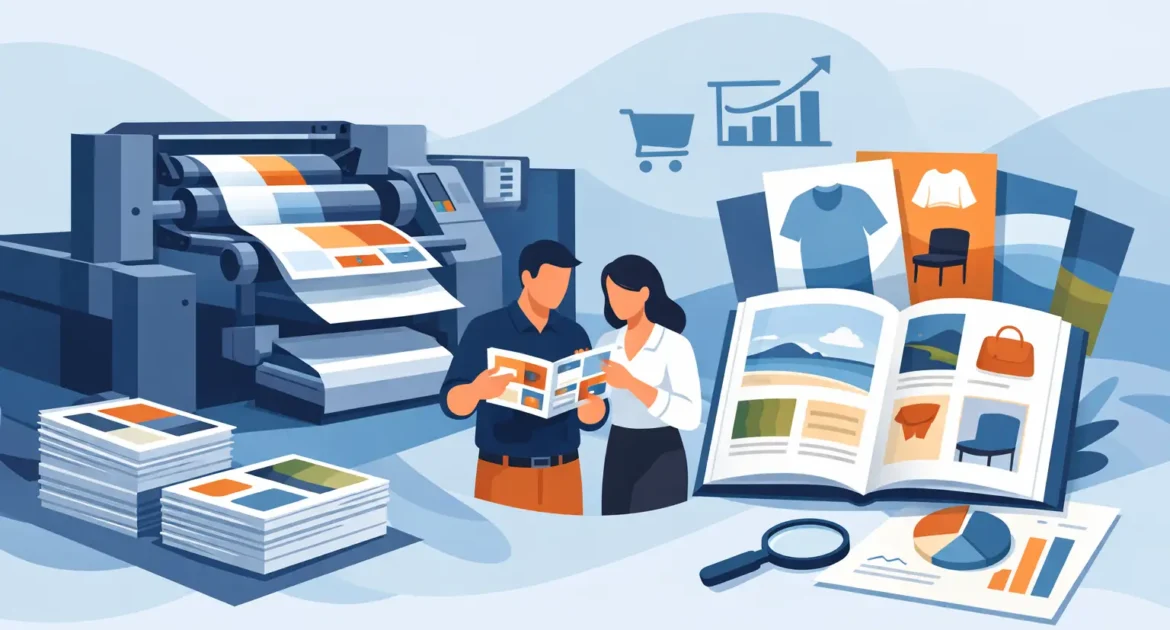
When you are ordering 2,000, 5,000, or 20,000 copies, bulk offset printing for catalogs stops being a simple print decision and becomes a brand decision. The paper feel, color consistency, page count, binding, and delivery timing all affect how your catalog performs once it reaches customers, sales teams, or retail locations. If the print run is large enough, offset is usually the smartest path because it gives you better control, stronger image quality, and lower cost per piece at scale.
Catalogs still do real work for businesses. Retailers use them to present seasonal collections. Restaurants and hospitality brands use them for menus and promotions. B2B companies use them as leave-behind sales tools that make a stronger impression than a PDF on a screen. When the goal is to look established, organized, and ready for serious business, print quality matters.
Why bulk offset printing for catalogs makes sense
Offset printing is built for volume. Unlike short-run digital jobs, offset uses printing plates and a setup process that takes more preparation upfront. That extra setup is exactly why it becomes more cost-effective as quantity rises. Once the press is running, the unit price drops, and the consistency from copy to copy is hard to beat.
For catalogs, that matters more than many buyers expect. A catalog is not a one-page flyer where small shifts in color might go unnoticed. It is a multi-page piece that often includes product photography, brand colors, pricing tables, and detailed layouts. If page 3 looks different from page 27, the whole piece feels less polished.
This is where offset has a clear advantage. It handles large runs with stable color reproduction, sharp detail, and clean solids. If your brand depends on accurate product presentation, especially in fashion, furniture, beauty, food, or lifestyle categories, those details directly affect customer trust.
What you gain from offset at higher volumes
The biggest advantage is usually cost efficiency over larger quantities. If you only need a few hundred catalogs, digital printing may be the better fit because the setup is faster and cheaper. But once you move into true bulk production, offset starts to deliver better value per unit.
You also gain flexibility in production quality. Paper choices tend to be broader, ink performance is stronger on many coated stocks, and finishing tends to feel more premium when the job is built properly from the start. A well-produced catalog feels intentional in the hand. That physical experience still influences how customers judge your brand.
There is also the issue of consistency across reorders. Businesses that print catalogs regularly need the second run to match the first as closely as possible. Offset workflows are well suited for repeatability when files, specs, and press settings are managed correctly.
When bulk offset printing for catalogs is the right choice
Not every catalog should be printed offset. The best choice depends on quantity, timeline, personalization needs, and budget.
Offset is usually the right fit when you are printing high volumes, using premium photography, needing dependable brand color, or distributing catalogs across multiple locations. It also makes sense when you want a more substantial printed piece with better paper and finish options.
Digital can still be better when speed matters more than unit cost, when quantities are low, or when each copy needs variable content. If you are testing a new product line with a small run, digital may be the practical move. If you are rolling out a proven catalog to stores, showrooms, sales reps, or direct mail lists in large numbers, offset often wins on both economics and presentation.
That is the trade-off buyers should keep in mind. Offset rewards planning. Digital rewards flexibility.
The specs that shape catalog quality
A good catalog starts long before it reaches the press. Many print issues come from rushed file prep or unclear production choices, not from the printing itself.
Page count affects paper weight, binding strength, postage, and how the piece feels in hand. A thinner catalog may work well with saddle stitching, while a heavier one may need perfect binding for a cleaner spine and better durability. The right choice depends on how long the catalog will be used and how polished it needs to look.
Paper stock changes the entire impression. Gloss or silk-coated paper can make product photos stand out, while uncoated stocks give a softer, more editorial look. There is no universal best option. A luxury brand may want tactile elegance. A fast-moving retailer may prioritize bright color and cost control.
Color management is another area where experience matters. If your catalog includes specific brand colors or product images that need accuracy, press calibration and proofing become critical. A clothing catalog, for example, cannot afford product colors that drift too far from reality. Customers notice, and returns can follow.
Finishing also plays a bigger role than many buyers expect. Matte lamination, gloss coatings, spot UV, or protective finishes can change both appearance and durability. These are not just decorative extras. In a high-handling environment, the right finish helps catalogs stay clean and presentable longer.
Common mistakes that raise costs or delay delivery
The most common problem is waiting too long to finalize artwork. Bulk offset jobs need proper prepress preparation, proofing, and scheduling. If approvals drag, the job can miss the production window and create avoidable rush costs.
Another issue is choosing specs without thinking about the full use case. A heavier paper stock may look impressive, but it can increase shipping cost and affect mailing efficiency. A premium finish may be worth it for executive presentations but unnecessary for mass in-store distribution. The right decision depends on where the catalog is going and what it needs to achieve.
Buyers also run into trouble when they focus only on headline price. A low quote does not always mean better value if color control is weak, trimming is inconsistent, or delivery timelines slip. With catalogs, the real cost includes reprints, delays, and the impression left on customers.
How to plan a smooth catalog print run
Start with the quantity and purpose. Are you printing for a sales launch, retail placement, trade show distribution, or direct mail campaign? That answer shapes almost every production decision.
Next, lock the page size, page count, paper stock, and binding early. The more clearly these are defined upfront, the easier it is to price accurately and avoid production changes later. If you expect future reorders, keep records of the exact specifications so the next run stays consistent.
Build enough time for proofing. Even fast production teams need approval checkpoints, especially on larger runs. Reviewing a proof carefully is cheaper than discovering a typo or image issue after thousands of copies are printed.
It also helps to work with one print partner that can advise on practical trade-offs. Sometimes a small adjustment in size, paper, or finish can reduce cost without hurting presentation. Other times, spending slightly more on stock or binding creates a noticeably better result. Good guidance is part of the job, not an extra.
Choosing a print partner for catalog production
Catalog printing is not just about putting ink on paper. It is about production control. You need a team that can handle prepress checks, recommend sensible specifications, maintain quality through volume, and stay responsive when timelines are tight.
That is especially important for growing businesses and multi-location brands. If your catalogs support product launches, promotions, or recurring campaigns, delays can affect sales activity. You need clear communication, realistic turnaround times, and pricing that makes sense before the job starts.
A reliable print partner should be able to explain where offset makes financial sense, where digital may be better, and how to match the catalog spec to your actual business goal. That kind of clarity saves time and reduces expensive guesswork. For businesses that need both speed and polish, working with an experienced production team like Doha Print can make the process far easier from file setup to final delivery.
Why catalogs still earn their place
A strong catalog gives people something to keep, share, and return to. It works on desks, in stores, in waiting areas, in sales meetings, and inside delivery packages. It can introduce a brand, support a campaign, or help close a sale without needing a screen.
That is why print quality matters. When the catalog looks sharp, feels substantial, and stays consistent across every copy, it reflects well on the business behind it. If you are printing at scale, bulk offset printing is often the most practical way to get that result without losing control of cost.
The smartest catalog is not always the flashiest one. It is the one that fits your audience, your budget, and your distribution plan while still making your brand look ready for serious business.