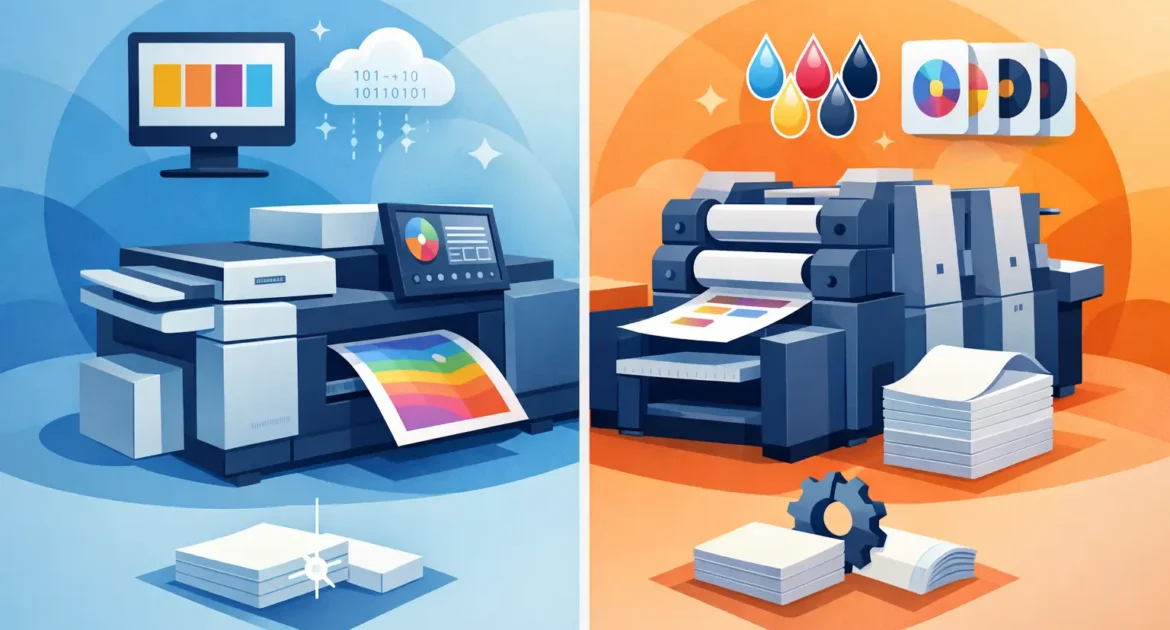
A rush order for 100 event brochures and a 20,000-piece product catalog may both look like print jobs, but they need very different production plans. In the digital printing vs offset decision, the right choice affects your delivery date, unit cost, color expectations, and how confidently your brand shows up in customers’ hands.
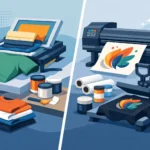
For businesses, the question is not which method is universally better. It is which one delivers the best value for the quantity, material, finish, and deadline you have. Digital printing is built for flexibility and speed. Offset printing is designed for consistent, high-volume production. Knowing where each method performs best helps you avoid unnecessary cost and get a polished result the first time.
Digital Printing vs Offset: The Core Difference
Digital printing transfers artwork directly from a digital file to the selected material. There are no printing plates to create, which shortens setup time and makes small runs practical. It is a strong choice for business cards, flyers, menus, invitations, short-run brochures, labels, variable-data pieces, and urgent promotional materials.
Offset printing uses custom plates to transfer ink onto a rubber blanket and then onto paper or another substrate. The setup requires more time, but once the press is running, it produces large quantities efficiently and with highly consistent results. Offset is commonly used for catalogs, corporate stationery, magazines, presentation folders, packaging inserts, and high-volume marketing campaigns.
Both can produce professional-quality work. The better option depends on the job details, not a general preference for one technology over the other.
When Digital Printing Is the Smart Business Choice
Digital printing works especially well when speed matters and quantities are low to medium. Because there is less preparation before printing begins, files can move into production quickly. For a restaurant updating its menu, an event organizer needing last-minute programs, or a startup preparing a small batch of sales kits, that time saving can be the deciding factor.
It also makes short runs more cost-effective. With offset, plate setup is a fixed upfront expense. When you only need 50, 100, or 300 pieces, that setup can raise the cost per item. Digital printing avoids that expense, allowing you to order the quantity you need rather than overprinting simply to reach a lower unit price.
Another practical advantage is versioning. If a real estate team needs agent-specific flyers, a retailer wants personalized discount postcards, or a company has several locations with different contact details, digital production can change names, offers, QR codes, addresses, and images from one piece to the next. This is called variable-data printing, and it helps businesses make direct mail and customer communications more relevant without creating separate print setups for every version.
Digital printing is also useful for testing. Before committing to a large packaging run or full campaign, you can print a smaller quantity to review the layout, messaging, material, and customer response. That reduces risk, particularly for new products, seasonal promotions, and first-time brand launches.
Best uses for digital printing
Digital is often the right fit for urgent business cards, short-run flyers, custom invitations, event materials, on-demand booklets, personalized mailers, small-batch labels, and limited-edition product packaging. It is also a dependable option when you need to reorder regularly in changing quantities.
When Offset Printing Delivers Better Value
Offset printing becomes more attractive as order volume increases. The plates and press setup require an initial investment, but that cost is spread across every item in the run. At higher quantities, the cost per piece can be significantly lower than digital printing.
This matters when a business is ordering thousands of brochures for a trade show season, producing a large catalog mailing, replenishing branded letterheads across multiple offices, or printing retail inserts at scale. A lower unit price creates meaningful savings when the quantity is high enough.
Offset also offers extensive control over ink and color. Standard full-color printing uses CMYK inks, but offset can use Pantone spot colors for precise brand hues. If your logo depends on a specific deep blue, bright orange, metallic ink, or fluorescent shade, offset may provide the color control your brand standards require. It can also perform exceptionally well on large solid color areas and detailed imagery.
Paper choice is another consideration. Offset presses work with a broad range of stocks, including uncoated stationery papers, textured papers, specialty boards, and materials selected for particular packaging or editorial applications. Digital capabilities have expanded considerably, but certain substrates, finishes, and large-scale specifications still favor offset production.
Best uses for offset printing
Offset is often the stronger option for high-volume catalogs, magazines, product manuals, large brochure runs, corporate stationery programs, presentation folders, premium printed inserts, and campaigns where exact spot-color matching is essential.
Compare Cost by Quantity, Not Just the Quote Total
A lower total quote does not always mean the better buying decision. Start by looking at quantity and unit cost. For a small run, digital printing is typically more economical because it has minimal setup. For a large run, offset usually gains the advantage because its setup cost is distributed over thousands of copies.
Storage should also factor into the decision. Ordering 10,000 flyers may reduce the price per flyer, but only if you can use them before details become outdated and have space to store them safely. If your prices, menu items, staff details, or promotions change frequently, ordering smaller digital batches can prevent costly waste.
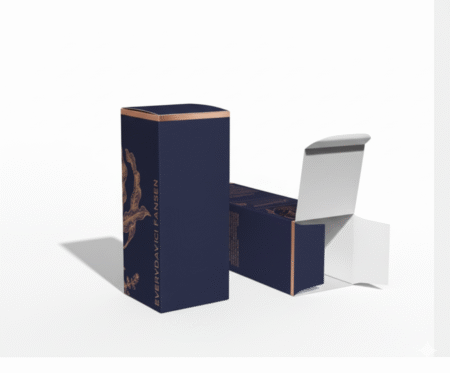
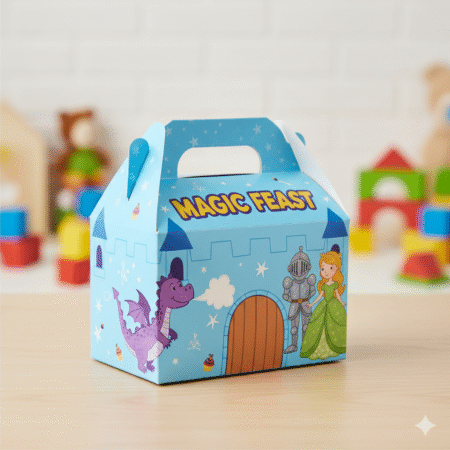
The same thinking applies to packaging. A growing brand may begin with short digital runs while testing product demand, then move to offset once designs and sales volumes are stable. That is not a compromise. It is a practical production strategy that protects cash flow while keeping the brand presentation professional.
Speed, Quality, and Color Expectations
Digital printing is usually the faster choice for short runs, particularly when a job is approved and ready for production. It supports fast turnaround and can be ideal for time-sensitive sales meetings, openings, exhibitions, and events. However, finishing requirements such as lamination, die cutting, folding, binding, or specialty coatings can still add production time.
Offset takes longer to set up, proof, and run. For planned campaigns, that lead time can be worthwhile. It offers excellent consistency across large quantities, which is valuable when every catalog page, brand brochure, or printed insert must look uniform from the first copy to the last.
Color should be discussed early, especially when brand identity is central to the job. Screen colors do not always match printed colors because screens use light while printers use ink or toner. Supplying properly prepared print files and approved brand color references helps prevent surprises. If an exact Pantone match is non-negotiable, say so before production begins rather than after the first run is complete.
Choose Based on the Job You Have Now
A practical way to decide is to start with four questions: How many pieces do you need? When do you need them? Does every piece carry the same content? How exact must the color and material specification be?
Choose digital printing when you need a small or medium quantity, quick delivery, personalized content, or the flexibility to update artwork often. Choose offset when you need high volumes, the lowest possible unit cost at scale, specialty inks, precise brand colors, or a wider range of traditional paper and board options.
There are exceptions. A premium short-run invitation may use digital printing with luxury finishing. A large order with a tight deadline might require a digital solution if offset setup cannot meet the date. The best production partner will assess the full specification instead of steering every job toward one method.
Prepare Your Artwork for a Better Print Result
The printing method cannot fix an incomplete file. Before production, make sure the final artwork has the correct dimensions, bleed, safe margins, image resolution, and color settings. Bleed is the extra image area beyond the trim edge that prevents unwanted white borders after cutting. Safe margins keep text and important elements away from the edge.
For commercial materials, use high-resolution images and avoid pulling logos from screenshots or social media profiles. Small file problems become much more visible on brochures, catalogs, packaging, and large-format materials. If you are unsure about file setup, ask for a prepress check before committing to the full run.
A thoughtful print choice supports more than a single order. It helps you control costs, meet deadlines, and maintain a consistent brand presence across every customer touchpoint. Whether you need a fast batch of promotional materials or a large, color-critical campaign, Doha Print can help match the production method to the result your business needs.